Key Dates
Submission of proposals: by 30 June 2026
Announcement of the programme: 30 July 2026
Artistic residencies / projects / laboratories: July to November 2026
Delivery of final documentation, full texts or materials for exhibition, archive and possible publication: date to be announced following the acceptance of proposals
Meeting of the Scientific Committee: 9 December 2026
Expedition / visit to the Serra do Açor: 9 December 2026
Opening of the exhibitions: 10 December 2026
International symposium: 10 and 11 December 2026, Universidade da Beira Interior, Covilhã
Since 2018, Montanha Mágica* (montanhamagica.ubi.pt) has been taking shape as a field of approximation between art, landscape, action and thought. It is not a closed programme but a device adrift, where artistic practices, research, territory and experience intersect within a regime of attention to the unstable forms of the landscape.
Within this context, the mountain has never been understood as landscape in the comfortable sense of the term; it was, rather, a surface of inscription, a site of tensions, a fold where the visible and the invisible articulate one another. In 2026, within iA* — Research Unit in the Arts, Montanha Mágica* ceases to be merely a periodic event and asserts itself as a continuous structure, a permanent laboratory, where practice-based research becomes both method and condition.
If previous editions rehearsed ways of seeing — between representation, experience, the imaginary and symbolic construction —, this fifth edition shifts the question: no longer how to represent the landscape, but how to remain within it when it becomes unrepresentable.
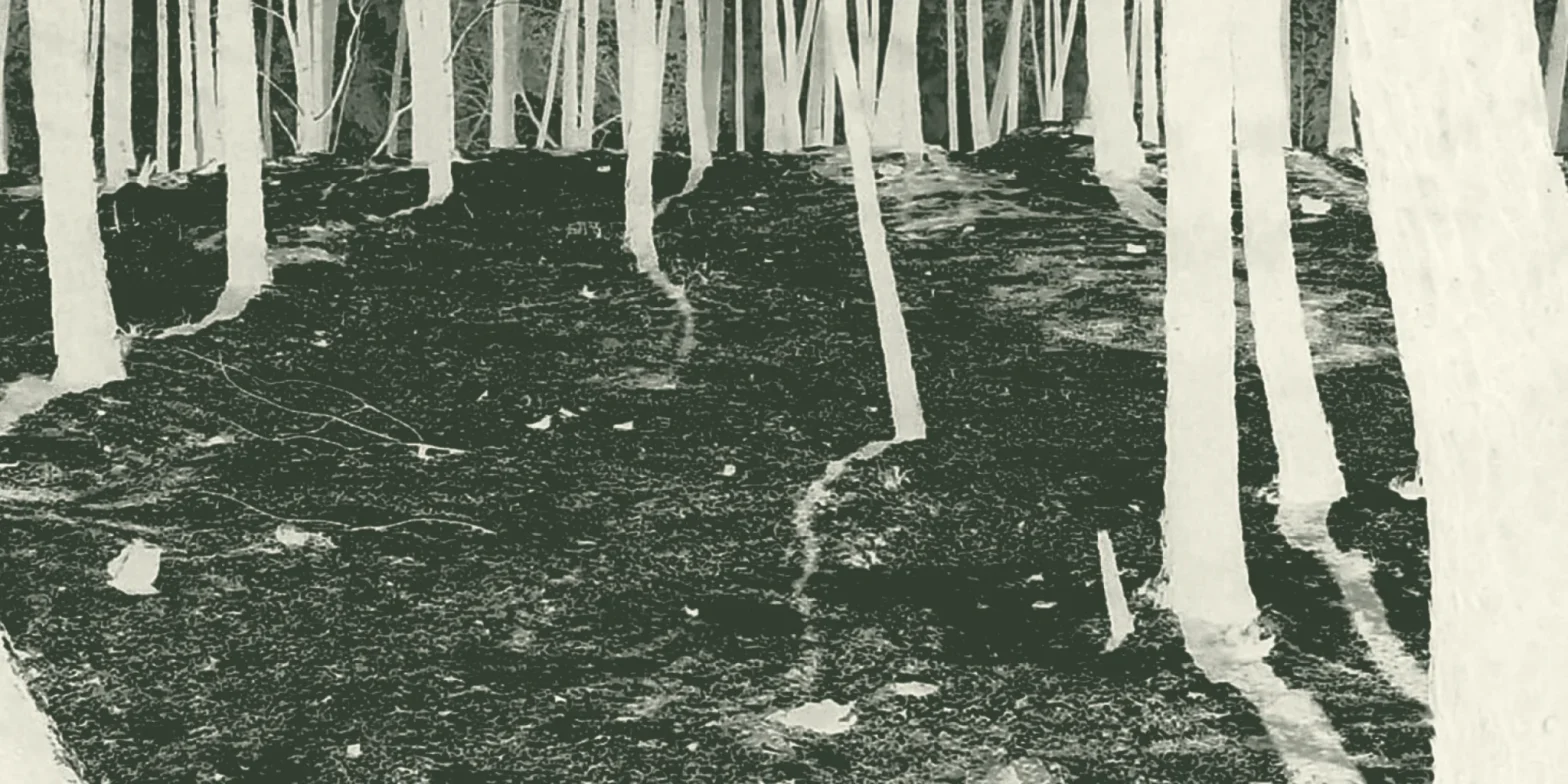
The mountain that has burned is not merely an object of contemplation. It is an event. Fire — with its incision, its violence and its ambiguity — introduces a radical discontinuity: it incinerates, obscures and reduces to ash, but it also exposes, reconfigures, returns to the surface and illuminates what lay buried. Smoke, charcoal, open soil, matter in suspension. And then, perhaps, the return: minimal grasses, unexpected hues, a slow breathing of the earth.
Within this interval — between devastation and regeneration — are inscribed impoverished territories, forgotten populations, interrupted ecosystems and displaced lives. The mountain thus becomes a field of tension in which catastrophe is not a theme but a critical condition — difficult, at times traumatic — that resists aestheticisation and summons an ethics of the gaze.
To look at and to see a burned mountain demands time, distance and risk. It demands accepting that the visible fails, that the landscape becomes opaque, that the world presents itself simultaneously as remainder and as possibility. It is at this point that MM* situates itself: not as a place of answers, but as a space in which ways of remaining attentive are questioned and tested.